
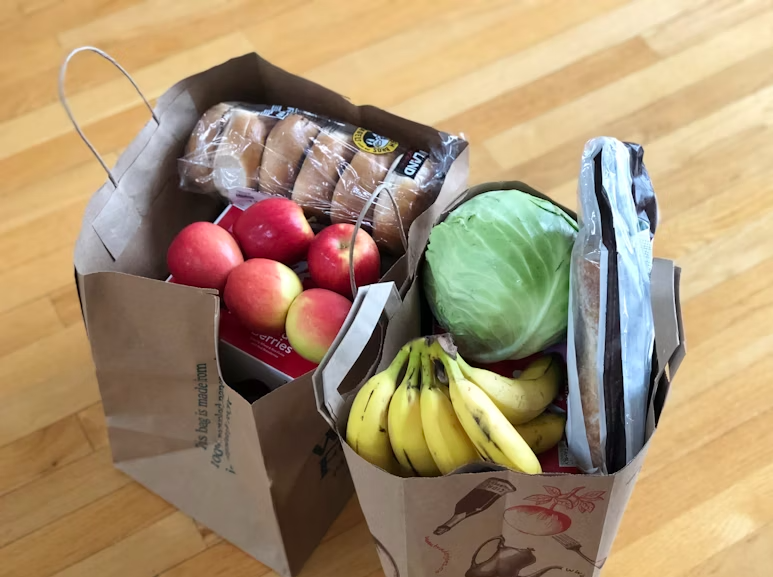
The state wants to broker charitable donations to food banks to counter the effects of SNAP payments stopping as of Saturday. Some don’t see how it’s going to work so well.
By Scott Morgan, Managing Editor
Oct. 28, 2025
On Tuesday, Gov. Henry McMaster authorized Central Carolina Community Foundation’s One SC Fund — a statewide initiative supported by philanthropic donors and funders — to collect charitable donations to directly benefit food banks around South Carolina.
The move is in response to this weekend’s potential interruption of Supplemental Nutrition Assistance Program (SNAP) funds. It is intended to augment the effects of SNAP benefits stopping once the clock turns to Nov. 1. That’s when the federal government shutdown would need to resolve by.
If no resolution happens, more than a half-million South Carolinians will lose their ability to use their SNAP benefits indefinitely.
See our main story HERE.
One SC Fund is intended to help food banks meet what is roundly expected to be a huge need.
“South Carolinians are eager to help, and I encourage those who are willing to donate to the One SC Fund or volunteer at your local food bank,” the governor said Tuesday.
Georgia Mjartan, president and CEO of Central Carolina Community Foundation said, “We are asking every corporation, foundation, and individual to step up now, so food banks can respond before the gap becomes a catastrophe.”
But while aiming to help, not all who work in the food insecurity space expect the initiative to work as well as hoped.
“ I don’t know how it’s gonna work and I don’t really understand completely what the governor’s thoughts are with [the One SC Fund],” said Teresa Spires, director of Know2 in Gaffney.
Know2 is a broad social services organization that also acts as Cherokee County’s only FoodShare South Craolina retailer. FoodShare is a program that accepts Healthy Bucks, which allows SNAP recipients to purchase $20 food boxes for $5. With SNAP interrupted, Health Bucks buyers would not be able to use their EBT cards to get the box for $5.
Spires said One SC Fund might be well-intentioned, but she worries that it’s too late to head off many disruptions.
“We’ve waited till now to start raising money,” she said. “How are you gonna get that money distributed quickly?”
At a press conference Tuesday, McMaster answered reporters’ questions about whether he would declare a state of emergency and whether the State Legislature would be called back for a special session to appropriate funds to pay for food distribution.
“Even if I did declare a state of emergency, assuming that emergency exists,” he said, “that would would only mean that there’s no money that that state of emergency would open up. We don’t have any.”
There is no state-funded mechanism to pay for food aid. The state has a $1.8 billion surplus in its current budget that lawmakers have spent most of this year debating where to spend.
McMaster said the State Legislature could call itself back to session and decide to appropriate money to food aid, but that it would be a clunky process.
“They could appropriate the money from some source,” he said. “But then they’d have to agree that that’s what they want to do. But that’s something that would take some time and some debate. There’s no debate over this [the One SC Fund plan].”
Mjarten addressed logistics questions of how the food will be distributed. She said the state’s four largest food banks — Golden Harvest, Harvest Hope, Low Country Food Bank, and Second Harvest — will receive supplies and distribute them.
The food banks initially will receive dollars given through One SC Fund by applying for grants, she said. Large food banks will get the most funding, “while gap filling with smaller grants to those smaller. localized food pantries and food ministries.”
One SC Funds “start at zero,” Mjarten said. Funds given for previous emergencies, such as for Hurricane Helene, are dedicated and cannot be spent for food relief.
The shortfall of funding to make up for SNAP would be enormous. Erinn Rowe, executive director of Harvest Hope, said it will take more than philanthropy to meet the real need hunger brings to South Carolina.
“A hundred million dollars a month is not something we’ve ever seen philanthropy raise in a week,” Rowe said. “We will buy [food] as fast as we can with the money that’s given us, but, once again, we’re limited by the amount of donations that we receive. It’s gonna take a statewide effort that is bigger than a philanthropy effort to fill in this gap that SNAP is leaving right now because of the sheer volume. We are not logistically made to address the sheer volume of need that’s about to happen.”
SNAP recipients with funds allotted prior to Nov. 1 will still be able to use their EBT cards. They just will not get replenished funds until after the federal government reopens.
If you’re interested in donating through One SC Fund, click HERE.
This story was to add further context from Tuesday’s press conference in Columbia.


 the Oasis
Leave a reply to SC Appleseed Legal Justice Center Cancel reply