
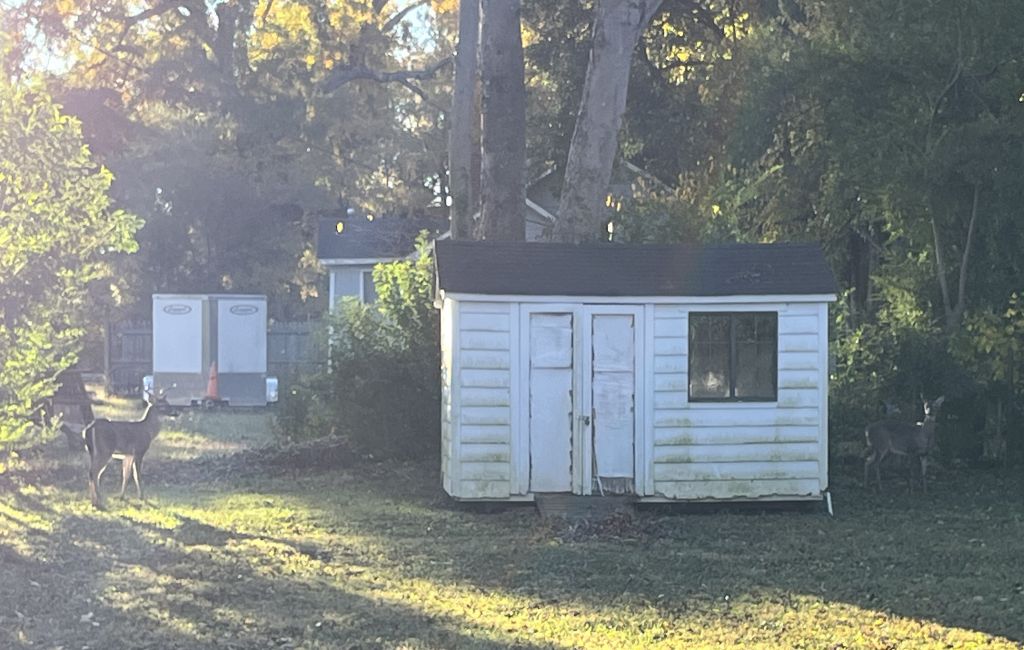
South Carolina is growing in population and investment, more than almost any other state. But it’s not growing uniformly, and that puts hollowing-out rural communities far behind the fanfare.
By Scott Morgan, Managing Editor
Jan 2, 2026
South Carolina hit the 5 million mark for population in July of 2017.
By the end of 2023, South Carolina was the fastest-growing state in the country. And while growth’s pace has cooled since, South Carolina enters 2026 as a continuing hot ticket destination.
But not everywhere.
According to the South Carolina Revenue and Fiscal Affairs Office, or RFA, 26 of the state’s 46 counties could lose population by 2040; every one of them rural.
RFA projects that six counties – Allendale, Bamberg, Clarendon, Dillon, Fairfield, and Marion – will lose at least 30% of their populations by 2040 or so. Between 2010 and 2020, two of those counties – Allendale and Bamberg – already did lose more than 30%, amid a lack of comparative investment from businesses and homebuilders.
The business investment aspect
South Carolina is a business-friendly state. Gov. Henry McMaster has made jobs and business growth a bedrock of his administration since it began in 2017 (the year the state hit the 5 million mark).
But the six counties mentioned above are not getting anywhere near the investment or attention as the state’s main destinations in the Upstate and along the coast.
According to the South Carolina Department of Commerce, since 2017, there have been 500 business expansions in the state, while 415 businesses have established here. The biggest sector for growth has been automotive.
Commerce data show that all this growth has led to 100,000 new jobs and $53.75 billion in business investment in South Carolina in that time.
In the six counties projected to lose 30% or more of their populations, there were 68 business expansions or foundings; 5,798 jobs created; and $1.47 billion in investment since 2017.
That’s 7% of the state’s business growth actions; 6% of the jobs created; and 2.7% of business investment, respectively.
For comparison, the six counties that RFA projects will grow the most by 2040 – Charleston, Greenville, Horry, Richland, Spartanburg, and York – combined, since 2017, for 371 business expansions or foundings; 44,777 jobs; and $17.7 billion in business investment.
That’s 40.5% of business announcements; 44.7% of jobs created; and 33% of business investment, respectively.
Most of the businesses growing or establishing in the high-growth/high-investment counties are office and automotive. Most of the businesses establishing or expanding in the low-growth/low-investment counties are in materials, warehouse, agriculture, and chemicals.
Tech schools factor in
Gov. McMaster also touts the state’s technical colleges as a conduit to good jobs, providing skills for a future workforce through relevant training.
The six high-growth/high-investment counties each have a technical college within their borders, each within 10 miles of the most populated cities or towns in their respective counties:
- Trident Technical College (Charleston)
- Greenville Technical College (Greenville)
- Horry-Georgetown Technical College (Horry)
- Midlands Technical College (Richland)
- Spartanburg Community College (Spartanburg)
- York Technical College (York)
Among the six low-growth/low-investment counties, there is one – Bamberg – that has a technical college within its borders (Denmark Technical College). Students from the other five counties are served by technical colleges outside their home counties, farther from population centers:
- 19 miles Manning (Clarendon County) to Sumter
- 22 miles Marion to Florence (Florence-Darlington Technical College)
- 27 miles Allendale to Denmark (Denmark Technical College
- 33 miles Winnsboro (Fairfield County) to Columbia (Midlands Technical College)
- 41 miles Dillon to Cheraw (Northeastern Technical College)
A Quick Aside: Yes, there’s online, but …
South Carolina has made investments in broadband and fiber access, with state legislators allotting more than $400 million from a federal, Covid-era investment in 2022. This expansion of high-speed internet has allowed for easier access to taking classes online.
But increased access to classes does not necessarily translate to completed college careers. A 2025 study by the California Learning Resource Network showed that while hybrid online/in-person learning has similar outcomes to in-person-only classes, online-only learning has much poorer outcomes. The study also shows that the ability to attend in-person classes can vary wildly among student populations.
Also in 2025, Forbes reported that students are increasingly backing away from online classes, preferring in-person learning. Which, again, is not easy for everyone to do, especially in rural communities where transportation insecurity is high.
The homebuilding aspect
Houses in rural South Carolina are old; in most cases, significantly older than in fast-growing areas of the state.
According to Census data, in 17 counties in South Carolina, 80% or more of homes were built before 2000. Five of the six counties projected to lose the most residents by 2040 are among those 17. In the sixth county – Clarendon – 79% of homes were built before 2000.
Little residential development is happening in these six counties. Over five years, from 2020 through 2024, the Federal Reserve Bank of St. Louis charted 1,468 residential permits issued in the six counties projected to lose the most people.
Meanwhile, in Greenville County, there were 1,862 residential permits issued.
Over two months – April and May of 2025. In the five year period of 2020 to 2024, there were 43,664 residential construction permits issued in just Greenville County – 24 times the combined total of the six rural counties projected to lose population the most..
Cost burden, the weight of how much it costs to pay housing expenses, in these six counties is high – at least 25% of residents lived in conditions the Fed classified as cost burdened in 2023, the latest date for which data were published .
Average rental prices in these counties, according to Zillow, in January, 2026:
- Allendale: $883 (with one available unit)
- Bamberg: $1,006 (with one available unit)
- Clarendon: Not Available
- Dillon: $875 (with 22 available units)
- Fairfield (Winnsboro): $900 (with 14 available units)
- Marion: $1,000 (with five available units)
Average weekly wages in three of the six counties – Bamberg, Clarendon, and Dillon – were below $1,000 in the first quarter of 2025. The highest weekly wage among them was in Fairfield County: $1,222.
Bear in mind, however, that a lot of people who live in Fairfield County work in Columbia or elsewhere. A study by Fairfield Economic Development, looking at worker migration in 2014, showed that 77% of Fairfield County residents who worked left the county to do so.
What this all means for the future of South Carolina’s rural counties is, potentially, a troubled future.
A grain of salt
For all the data on wages, permits, and business investment, there is a glaring hole in understanding why some counties are losing so much, and are projected to lose so much more over the next decade-and-a-half.
“We don’t know the experiences of these residents who have poor housing quality,” says Nabila Inak, a data coordinator at the South Carolina Office of Rural Health. “We don’t know why people are moving away from rural areas or moving out of South Carolina. Or moving into South Carolina. So it’s kind of the extra context that we need to explain why these issues or situations are happening.”
Data, in other words, can only say so much. But numbers do not lie.
And when it comes to the state’s least-resilient counties, the numbers don’t come close to those from areas of the state where investment is high.
And as these counties continue to hollow out, residents left behind will have fewer options for healthcare, transportation, and food, as South Carolina’s rural/urban divide becomes more stark amid the state’s impressive, but certainly uneven, growth.



 the Oasis

Leave a comment